
🐠 Fish are smarter than the joke suggests
Do Fish Get Bored? The Three-Second Memory Myth
The three-second memory thing is comprehensively untrue, and it has done a lot of damage to how we keep fish.
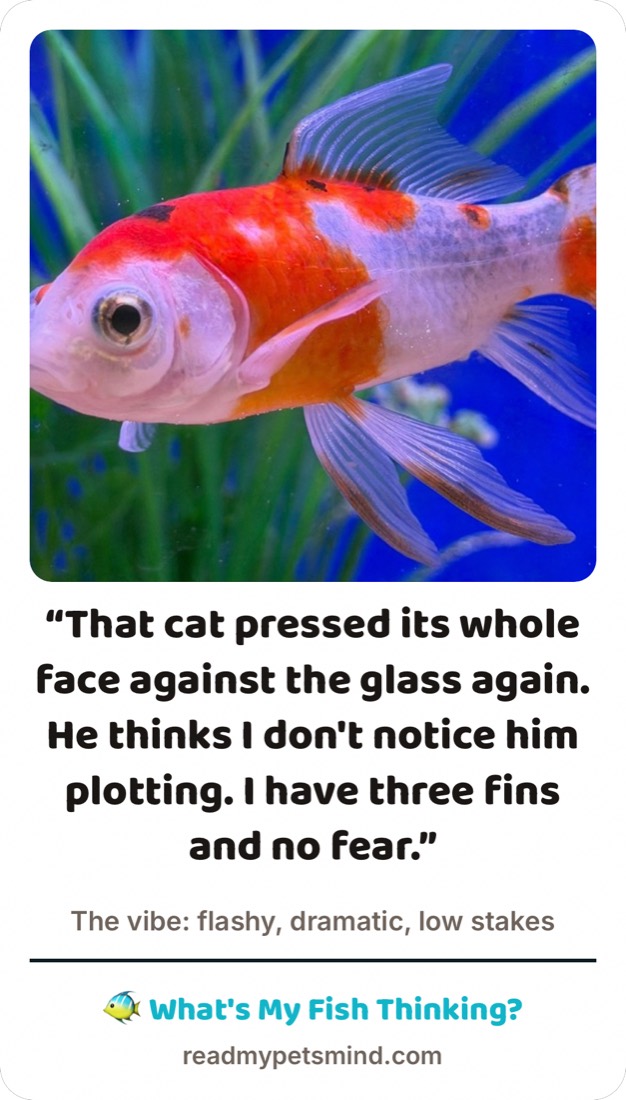
The memory myth, dealt with
Goldfish memory has been tested repeatedly, and they retain learned associations for months, not seconds. They can be trained to respond to particular sounds, colours and feeding locations, and they still remember the association weeks later.
Fish also learn by watching other fish, recognise individual tank-mates, and in several species recognise the specific human who feeds them. The three-second line is a myth that stuck because it was convenient — it made a bare bowl feel acceptable.
So do they get bored?
"Bored" is a human word, and nobody can ask a fish directly. But understimulated fish in bare tanks show measurably different behaviour from fish in complex ones: more repetitive patrolling, more glass surfing, less exploration, and in some species more aggression.
That pattern — repetitive movement in a featureless environment — is what we'd call boredom in any other animal. It's reasonable to use the word here, with the caveat that we're inferring.
Signs your tank is too dull
- Glass surfing — swimming repeatedly up and down the front pane. Sometimes water quality, often under-stimulation.
- Endless identical laps of the same route with no investigating.
- Hiding constantly — usually too few hiding places, oddly enough. Fish with nowhere to retreat stay hidden; fish with options come out.
- Listlessness at the bottom with no obvious illness.
Check water parameters first — the overwhelming majority of odd fish behaviour is water quality, not psychology. But if the water is right and the behaviour persists, look at the environment.
What actually helps
Cover and sight-breaks. Plants, wood, rock. Counter-intuitively, a tank with more hiding places usually has more visible fish, because they feel safe enough to come out.
Varied feeding. Scattering food, sinking pellets, feeding at different spots — foraging is most fish's main daily occupation, and a pinch of flakes in the same corner removes the entire activity.
Space to move properly. Floor area and swimming length matter more than litres on a box.
The right company. Schooling species kept alone or in twos are stressed, not peaceful. Research the species rather than the shelf label.
So what is the actual thought?
Shorter than yours, mostly concerned with food, territory and whether that shape near the glass is a threat or the person who brings the flakes. Fish are not contemplating much. But they are noticing, remembering, and forming associations — which is considerably more than the bowl-and-a-plastic-castle school of fishkeeping assumed.
Quick answers
Do fish recognise their owners?
Several species do. Archerfish have been shown to distinguish between human faces, and many aquarium fish clearly learn to associate a specific person with feeding.
Is a bowl cruel for a goldfish?
Generally yes. Goldfish grow large, produce a lot of waste and need filtration and swimming space that a bowl cannot provide.
Do fish sleep?
Most do rest — reduced activity and responsiveness, often at a favoured spot — though without eyelids it looks different from mammal sleep.